Search

Happy. Healthy. Heathen.

Traveling, training, thinking, talking, typing

Author

Gayle Jordan

Law student, massage therapist, ironman, mom, gammy, hippie liberal atheist.

FYLSX recap.

OK, precious posse —

Here’s the scoop.
First, thank you for being so patient with me.  I know I’ve been an absolute bear, and it’s only because I surround myself with the world’s most wonderful friends that I’m able to survive this!

So…

Flew out to LA last Wednesday, and spent a day with the squeeze before reporting for duty at the Pasadena Hilton.  I picked up my girl Rosine at LAX (blog post about the world’s best study partner to come – I totally get credit for recognizing brilliance when I see it…) and headed to review weekend.

Best study buddy ever.

Because of my freaky-deaky online law school, as I have mentioned, all the studying is ON YOU.  Which, for some of us overachieving, Hermione, type A personalities, that is perfect.  We like moving at our own pace, we like figuring out what we have to know, and we truly love learning it.  I’m speaking for my fellow students, perhaps out of turn, but, along with the flexibility, is the reason we chose this school.

So what a spectacular moment when we all come together for the review weekend!  We’ve skyped one another, emailed, texted, called, IM’d, conference called, and class-chatted for a year and a half.  We’ve stalked one another’s Facebook, we’ve tried to put a 3 dimensional face to our friends, we’ve had virtual study groups, and finally, we get to meet for the first time REAL TIME, with real faces, and real voices, and real smiles (remember when Darth wanted to look at Luke with his own eyes?  Yeah, like that.)

The review weekend begins with a mock test that simulates the FYLSX (First Year Law Students Exam – have I mentioned that?).  The following 2 days are a review/debrief/dissection of the test, in a room with 80-100 of my closest law school friends.  I loved being in the room with all that academic energy, drive, and passion.  Our reviewing professor, Professor Steve Bracci, is the undisputed hero of the weekend, and if his earnestness could get us through, we would all pass with the proverbial flying colors.

We also got to meet most of our other professors, who have been completely available and absolutely helpful.  My brother attended a bricks-and-mortar law school (hipster-speak for plain old boring law school), and he did not have the complimentary things to say about his professors that I do about mine.  I’ve never waited more than 5 or 6 hours for an email response, and each time, the professors offer to also chat on the phone if we think we need extra help.  And no, all this sucking up does nothing for getting me to pass the test – CalBar is the complete and final say on that; our faculty have no input.

So test day rolls around, we report to the Pasadena Civic Center – all 800 of us – with our belonging in a clear, ziplock bag, earplugs, #2 pencils, and enough nervous energy to have powered the building for the entire 8 hours.  4 essays, 4 hours, and hour break for what would have been lunch if anyone could have eaten without puking, and then 100 multiple choice questions in 3 hours.  (Let me help you – 1.8 minutes per question).

And just like that, it was over.

“So, eleven hundred men went in the water; 316 men come out and the sharks took the rest, June the 29th, 1945.”

Ok, maybe it wasn’t quite that bad, but it was pretty brutal.  Results released by CalBar August 10, and I’m sure it’s an unintentional oversight on CalBar’s part that the last day for regular-cost registration for the retest is August 1.  Hmmmmm.

The $10,000 question?  I honestly do not know if I passed.  The essays were solid, and while the grade is combined, the MCQ’s were sketchy, and I don’t know if the essays can lift me up.  So retake is October, and another good time with my posse, another trip to Pasadena.

In the meantime, 2L rolls on (totally different subjects than the test subjects – an extra special bonus!)

Back to my life, my home, my friends, my work!  I’ve missed you all!  Thank you again for being so patient – don’t get into any legal trouble til I’m ready!  =)

Thanks for reading!

Most boring post. Ever.

This might be the most boring blog entry in the history of blog entries.  It’s just to serve as an explanation of where I have been, and where I’ll be for the next few weeks.

Underground.

When you attend a freaky-deaky online law school like I do, California insists you take what is known as the First Year Law Students’ Exam, affectionately known as the Baby Bar.  It’s a great idea – the premise is that if you can’t pass this bad boy, you really shouldn’t put a whole lot of time and effort into continuing (that’s what I’ve decided is the premise).  I have to fly to Pasadena the week before, attend a review weekend, and then the test is all day June 26:  4 one-hour essays, and 100 multiple choice questions.

Rose Bowl - the only Pasadena icon I know
Rose Bowl – the only Pasadena icon I know!

I am halfway through my 2nd year, but because the test is only offered in June and October, I am scheduled to take the test June 26.  So, you can do the math…since January, I’ve been studying 1L and 2L subjects.  #firstworldproblems

They way it works, you have 3 tries to pass this test, and an administration counts as a try.  In other words, even if you opt not to take one of the 3 consecutive administrations of the test for whatever reason, that counts as a try.  After the 3rd go, best wishes for your new career, which will not be the law.

I have this June, the following October, and June of 2013 to kill this mofo.  I’ve been studying like crazy, all while studying all the 2L subjects (Civil Procedure, Criminal Procedure, Real Property, Constitutional Law).  I’m crabby and sleep-deprived and full of self-doubt.  And I still have almost 6 weeks to go.

I should say that I really do love this school, I love the studying, the lectures, even the essays.  I’m going to see this through to the nth degree, 3 takings of this test and all.  I would really really really like to pass it on the first go, and I’m doing all I can to make that happen.

Which is why I’m writing this post.  It’s why I haven’t blogged in days and days.  It’s why I’ll be lying low for a bit.  And it’s why, if you see me around, I may be in a fog, I may be short and snippy, or I may not even see you if you wave!  Please be patient with me – – I’ll be back, I promise.

In the meantime, enjoy your May and June, and I will emerge on June 27th!

Thanks for reading!  (and for being patient!)

Kick-ass guest post

The following is a special guest post by Glenda Jordan.  It was written as a paper for her Spring 2012 Gender and Society class at UT, where she is a senior majoring in Art.

“You write sociology papers like a girl!”

One of the worst insults a man can receive is to be called a woman. If a man is caught doing any ‘female’ activity or exhibiting ‘feminine’ behavior, he is condemned to the highest degree.

This is such a reality that advertising companies will do everything in their power to make sure that their manly product is not just masculine, but outright insulting to the very idea of femininity in general. In no way can a man consume a product that’s made or marketed for women. Not only is this incredibly sexist towards women, but profoundly sexist against men as well.

This concept of gendered advertising reaches into every product imaginable, including but not limited to: food, hygiene products, cars, household products, tools, fitness plans, and beverages. Gender-biased advertising is pervasive in TV, print, and radio, and seriously affects society’s perception of gender.

Beverages and food seem particularly affected by gender messages. For instance, although diet soda has been around for quite a while, soft drink companies came up with a new version of a low calorie drink they could market towards men, because ‘diet’ is seen as a feminine word and concept. Society says it is much less acceptable for a woman to be overweight than a man, so ‘diet’ and ‘woman’ go hand in hand. Media, advertising, and society tells us women must have perfect bodies.

An example of two major companies that already produced a diet soda, but have made a new low-calorie drink that excludes the word ‘diet’ include Coca-Cola and Dr. Pepper.

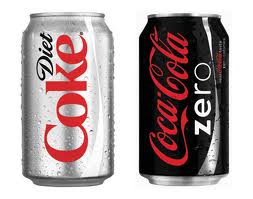
The original diet drink was straightforwardly named, with Diet Coke and Diet Dr. Pepper being the plain alternative to their sugary counterparts. Coca-Cola introduced Coke Zero in 2005. The design of the can featured black coloring and stocky, bold fonts in an attempt to make the can more masculine.

But perhaps the most audacious attempt at marketing a diet drink to men came in 2011 when Dr. Pepper introduced Dr. Pepper TEN. The can aesthetics featured a masculine gunmetal gray color scheme with rivets, a design strategy that evokes imagery reminiscent of weapons and power tools. The commercial advertising for the soda depicts an over-the-top jungle action faux-film sequence, with a muscular man claiming, “Hey ladies! Enjoying the film? Of course not! Because this is our movie! And Dr. Pepper TEN is our soda. It’s only ten manly calories, but with all 23 flavors of Dr. Pepper. It’s what guys want! ….So you can keep the romantic comedies and lady drinks, we’re good. Dr. Pepper TEN – IT’S NOT FOR WOMEN!” This is actual commercial on real television. The company would tell offended audiences that it’s simply satire, and of course it’s a joke. However, how acceptable would this advertisement be if it implied that the drink was for Caucasians, and not African-Americans? Would they be able to get away with saying it’s simply a joke, that of course black people can drink Dr. Pepper TEN? In the backlash against the Dr. Pepper TEN commercial, women have been trying to contact the company for an answer to the sexist advertisement. The response is nearly as condescending and patronizing as the commercial itself, with customer relations response emails being ‘written by women’ saying that they aren’t offended by Dr. Pepper TEN commercial. To use the ‘well I’m the same minority and I’m not offended’ reasoning is incredibly myopic and derogatory.

Yogurt presents another gendered food phenomenon, with commercials for yogurt being specifically aimed towards women. Perhaps because the food itself is pastel and soft, therefore men couldn’t possibly consume it, that companies feel they couldn’t market it towards men. In one commercial for Yoplait, two women, who are a very politically correct duo of a black and white woman spending time together in a spa (implying that all women can enjoy yogurt, regardless of ethnicity or socio-economic status! How progressive!), talk about how their yogurt is so good, that the next greatest thing they could compare it to is shopping for chocolate covered high heels. Once again, this is an actual commercial. On real television.

Advertising also tells us that women are the only people who have digestive problems and need assistance with their bowel movements. Activia is a yogurt that claims to help with the body’s digestion, and once again only women are the consumers. After the Activia campaign was launched, more digestive-aiding yogurt was created like Fiber One, and Yo-plus (all of which are created by Yoplait). There is such a feminine stigma to yogurt in today’s society, that some men, even if they want to eat yogurt, will avoid buying it. I personally know of several men who have requested their girlfriends or wives to buy them Activia because they want some, but are just as embarrassed to buy it as they would be having to buy tampons for their partners. It is also significant to note that the only other major consumers of yogurt, according to advertising, are children. Trix yogurt and Gogurt are major brands and sit right beside all the lady yogurt. In fashion advertising and media, women are constantly being portrayed as childlike or juvenile.

Hygiene products are incredibly gendered. Some of them are understandably so, like conditioner meant for longer hair or soap meant to remove makeup. However, men cannot just be marketed soap. It cannot be flowery, girly, or gentle in any way. Men must have manly soap, and advertising companies are adamant to make sure that both men and women believe this. As with the infamous lady-yogurt, there is such a stigma attached to tools that women use to clean themselves that men couldn’t bear to wash in the same way that a woman would get clean (or that’s what AXE tells us.)

AXE came out with the Detailer Shower Tool. It’s basically the guy’s version of a scrub pouf or loofah. It’s just another way to lather up soap, and that’s a difficult task with just your hands. A shower pouf works very effectively, but that’s what girls use, so AXE solved that problem by created something that looks like a car part/spare tire. In the commercial for it, no less than eight supermodel women clean the man’s body with it in a industrial car assembly style setting. Judging by the design graphic and aesthetic layout of men’s hygiene products, men also abhor any and all color other than gray, navy blue, and black. I have often seen products use the advertising scheme of saying things like “it’s none of that girly stuff” or “this product isn’t for girls/women”.

The extreme absurdity of this type of advertising lies with the reality of the products themselves. It. Is. Soap. It’s not for power tools hardcore enough that someone of small stature or strength couldn’t safely use them, it is literally slimy goo that you rub on your body to clean yourself. To claim that any product is just too hardcore for women to go near it is a marketing ploy trying to convince men that what they’re using is not feminized in any way, and that their masculinity is safe. Remember, nothing is more insulting or degrading than for a man than to be called a woman.

Advertising, media, and society tell us that women are born with the ability to use household appliances. Although men are usually praised for their competence at life in general, commercials portray them in another way when is comes to domesticity. Obviously only women do housework, but that not only because they’re women. It’s because the house would collapse if a man even attempted it. Commercials portray husbands and fathers as blundering idiots that have no idea of how to cook, clean, or take care of children. Exasperated wives and mothers roll their eyes and smile sympathetically as they take over what is a simple and ‘traditional’ task for them.

Advertising tells us that men can barbecue like a pro, but once the cooking and preparing food for the family is inside the house, it’s a disaster. Jif’s peanut butter slogan is ‘Choosy Moms Choose Jif!’, and KIX cereal’s is, ‘Kid-Tested, Mother Approved!’. In a commercial for Combos cheese snacks, the real mother is replaced with a ‘Man Mom’, in which the father is playing the mother role. Because he has absolutely no idea of how to provide nutritious sustenance for his children, he feeds them solely on cheese pretzel snacks.

The portrayal of domestic life in these commercials are just as sexist towards men as they are to women. Men are incapable of housework and childrearing, while women fly through it with ease because it’s what they were born to do. Companies even create household appliances specifically for men so that if men must do a domestic chore, they at least don’t look like a woman using it.

In 2010 Philips introduced an clothing iron designed for men. Looking more like a power tool than the average clothing iron, Philips claimed it offered ‘more power, more steam, more performance’. Apparently Philips feels if a man has to submit himself to the infamously domestic female task of ironing clothes, the tool he uses at least needs to be better than what women use, as well as looking more rugged.

The irony about common household objects, tools, or products that already exist but then companies make ‘masculine’ versions, is that it negates the reason for creating the masculine object in the first place. Companies create male version of female products because men do not want to feel emasculated when using something. It is very important that the product avoids colors like pink and purple, and cannot look feminine, because it is degrading for men to look like women, because how are women described? Shallow, materialistic, and frivolous. The irony is that products like these prove that men are actually the ones that possess all the qualities they claim women have, because they will go out of their way to buy something simply based on its aesthetics rather than its performance.

It’s important to note that the blithering idiot men in the domestic commercials are what men are supposed to be like when they turn into husbands and fathers. Before they settle down into married life, however, they are portrayed as overly-muscular, attractive, and domineering men capable of attracting any woman they want (as long as she looks like a supermodel). However, the domesticated men still want to be the sex-fueled violent beast their instinct tells them to be.

During the 2010 Superbowl, Dodge released a commercial about the Charger that depicted men standing still with grim faces while an inner monologue narrates their feelings. Parts of this monologue include, “I will eat some fruit for breakfast. I will shave. I will clean the sink after I shave. I will say yes when you want me to say yes. I will be quiet when you don’t want to hear me say no. I will take your call. I will listen to your opinion about my friends. I will listen to your friends’ opinions of my friends. I will be civil to your mother. I will put the seat down. I will separate the recycling. I will carry your lip balm. I will watch your vampire TV shows with you. I will take my socks off before getting into bed. I will put my underwear in the basket. And because I do this – I will drive the car that I want to drive.” The actual tagline and title for this commercial is ‘Man’s Last Stand’. Not having this car is the proverbial line drawn in the sand of all the crap that a man has to put up with in domesticated, civilized, and most significantly – feminized life. This commercial implies that men (regardless of socio-economic status or ethnicity), all detest the same things such as maintaining their personal and household hygiene, remaining non-violent, attempting to be sensitive and attentive, and being in a domestic partnership with a female. It also implies that men are literally desperate to resort back to hairy, filthy, violent man-beasts with no concept of civility.

Commercials tell us that that’s what all men want deep down, to return to the neanderthal roots of violence and power. In this Dodge ad, there is a powerful message being said: men don’t want to do any of the things listed and they resent the fact that they must do so anyway. Who is forcing them to live like this? The implication is clear. Although I am sure society is implied to have a role in forcing men to be civilized, in this ad the gross perpetrator is woman, and all she represents. In the monologue, the female’s friends, as with her mother, are nearly unbearable, but the fast car makes it worthwhile. The statement about the lip balm is particularly representative of the idea that for men to be associated with anything feminine is a societal crime. Man cannot bear to hold the female’s lip balm, but will do it if he can drive the fast car he deserves. Women suffer from silly female problems like having chapped lips and cannot hold their own lip balm (their purses are probably too full of chocolate covered high heels, tampons, makeup, and yogurt to fit chapstick), so the man must do it for her. To him, it probably is the most degrading thing on the planet, but as the commercial states, if you have the car, it’ll all be tolerable.

In the same way that traditionalists would argue that women want to be housewives and child-bearing home makers, so all the ads and hype and media are just satisfying women’s desire to be the way they are meant to be, the advertisers for all the hyper-masculine media would argue that the absurd man-beast is indeed men’s natural state. There is this pervasive stereotyping idea that men just desperately desire to be as cave-men like as possible. They hate shaving, bathing, wearing clean and/or proper clothes, keeping house, putting up with women in any context that doesn’t involve having sex with them, eating anything other than meat, working, and pretty much being ‘civilized’ in any context. The misogyny present in advertising that tries to sell products to males is disgustingly overt.

In 2006, Burger King launched the ‘Manthem’ commercial, which depicts a man eating lunch with his girlfriend at a fancy restaurant. Disgusted with both the content and proportions of his meal, the man can’t take it anymore and gets up to burst into song. Some of the song lyrics include “I am man, hear me roar, in numbers too big to ignore, and I’m way too hungry to settle for chick food! [….] Oh, yes, I’m a guy! I’ll admit I’ve been fed quiche! Wave tofu bye-bye!” At one point during the ad, a man strips off his underwear, flips a minivan off of a bridge, and unfurls a banner that reads ‘EAT THIS MEAT’.

As with the yogurt advertisements, food plays a large role in the way gender differences are portrayed by advertising. Men are condemned for eating healthy food, and are pussy-whipped if their girlfriend made them. And small portions? Forget about it. But the worst, the most unforgivable crime of the man-food code is to eat vegetarian. Only weak, spineless men would consider not eating meat. I’ve been a vegetarian for eight years now, and I can tell you that people certainly feel it is incredibly wimpy and pathetic to consider not tearing into animal flesh. Caring about the welfare of lesser creatures makes you a coward and a pansy, and you deserve to be ridiculed for it! (or so Burger King says).

Commercials and advertising imply that you are not a real man if every meal you consume doesn’t consist of industrial quantities of meat and any other type of food that will cause early onset cardiac arrest and obesity. Another lyric in the song was “I will eat this meat until my innie turns into an outie!”. It seems that food advertising has polar opposition for gender: women must eat as little as possible or feel guilty for consuming anything with more than 5 calories, and men must be proud of the massive amounts of fatty foods they consume (or at least want to consume). Yogurt is again a perpetuator of this idea, with its commercials trying to convince women that they have to avoid any type of desert food, but it’s all alright because the magical Yoplait has come up with tiny cups of flavored dairy alternatives to their favorite and selfish splurges like cake, pie, and ice cream. It’s just like the real thing! Right?

So with all of these commercials, products, and advertising ploys, we’re still left with the reality that society endlessly and relentlessly tries to convince us that it is not ok to be female. When did this insult begin? With the dawn of patriarchy eons ago? It is reasonable to assume that as long as women were and are considered the weaker sex, it would be an insult to men to be compared to one. What are the qualities that society and media tell us women possess? They tell us that women are frivolous, vapid, shallow, self-centered, nagging, bitchy, unreasonable, materialistic, and child-like. Both advertising for women and men propagate this idea. Average, everyday jibes perpetuate the female-accusatory insult. How many times have you heard men say to each other, “You’ve been whining all day. Do you need a tampon” or “Are you on your period?”. I can recall several films, mainly action or military, when a strong male authority figure shouts at a group of men, “This isn’t girl scouts!”.

In the Sandlot, the local rag-tag baseball group is having an insult match with the uniformed official team. The final blow that causes everyone’s jaw to drop and for an epic revenge match to be declared is when the rag-rag team member who’s representing his side shouts, “You play ball like a girl!” This rhetoric states that it is so incredibly easy to be a woman, and that the tasks and activities that women participate in are so shallow and purposeless and simple that to be accused of being associated with anything of the like is horrifying and insulting to the nth degree.
How do we combat this disparity? I have personally made people stop and stare when, after they utter a female-accusatory insult, I look straight at them and say, “That’s offensive to my gender.” I find it catches people up a bit, it’s like they don’t quite know what to do with what I said. I feel that this reaction is due in part to the reality that nobody seems to be addressing this issue in all seriousness. The female-accusatory insult prevails, day in and day out, in every level of society. When I pointed the offensiveness out to my brother, I was pleasantly surprised when he simply said, “Yeah. Actually, you’re right.”

I feel that the first step to try and dispel this type of language is to just get people to acknowledge what they’re saying. I also think it’s incredibly important to point out the sexism towards men in media and advertising that perpetuates the female-accusatory insult. Of course men are capable of child-rearing and domestic tasks. The insult degrades the mere existence of women and condemns men of expressing anything not ‘masculine’. For instance, if during a scene in a military film, a soldier cannot perform a task due to physical or emotional strain, a savage general could yell, “Suck it up, soldier! This isn’t girl scouts!” and it would be commonplace and acceptable for him to say that. This would imply that men who struggle with any physically or emotionally draining task is weak and pathetic for suffering, and that it’s not acceptable to feel that way.

This is why this rhetoric is damaging for both genders, not just women. Even the extremely common expression, “man up!” or the command to “grow a pair!” promotes the same sexism. One must be as masculine as possible or grow a pair of testicles to accomplish difficult tasks. “Ballsy” is a word used to describe someone of considerable courage and daring, while “pussy” is used to describe a weakling. “Pussy” having the obvious double usage of being both a descriptive term for a sissy and a coward, as well as the slang for a woman’s genitalia.

In an episode of South Park, the boys (Cartman, Stan, Kyle, and Kenny) are horrified to learn the truth of the veal industry, and steal calves from the butcher so that they can keep them safe in their room. Stan is so convicted of his passion for animal rights that he becomes a vegetarian. As the episode progresses, he becomes very sick and lesions appear all over his body. At the end of the episode, his doctor diagnoses him with a condition where the lesions are actually tiny vaginas that appear all over his body.

With the way that women are portrayed be society, I would almost agree that yes, actually, it is that horrible to be a woman. But only because we are treated as such by advertising, men, society, and even  other women.

The point to keep in mind here, over all this discussion of these gendered ads and commercials, is to really see what the companies are selling, and the consequences of how they sell it. Soap. Shower poufs. Soda. Yogurt. Cars. All these are seemingly so important and critical to a functioning society, that advertising companies will jeopardize the healthy perception of gender in society because they feel it will make them wealthier. The companies seem to forget human decency and respect all together for the sake of the almighty dollar. If human beings feel that these commercials and the attitudes they perpetuate are harmful, then they must make a stand and voice their opinions against these companies and their advertisements.

When those attitudes extend beyond the commercials and advertisements into everyday life, when you hear people saying anything that suggests that being a female is inherently negative, it is vital that you voice your disapproval.

It should not be acceptable to have the accusation that a man is feminine be the most offensive insult he can endure.

It should not be acceptable that a man who is a husband or father is expected to have no competency when it comes to household work and childrearing.

These attitudes are ridiculous, infinitely absurd, and incredibly detrimental to both genders. So man up, grow a uterus, and fight like a human being: with passion, reason, and equality.

Thanks for reading.

Scopes 2.0

Gotta love Tennessee.

The Scopes trial was in 1925.  Almost 100 years later, we are still fighting to have evolution, among other science, taught in our public schools.

Last week, Tennessee HB 368/SB 893, the ‘Monkey Bill’ was made law.  This bill can be read in its entire 2 pages here.

Here’s the relevant paragraph:

(2) The teaching of some scientific subjects, including, but not limited to,
biological evolution, the chemical origins of life, global warming, and human
cloning, can cause controversy;

The governor didn’t actually sign the bill, but acknowledged that it would become law anyway, even without his signature, which, of course, it did.

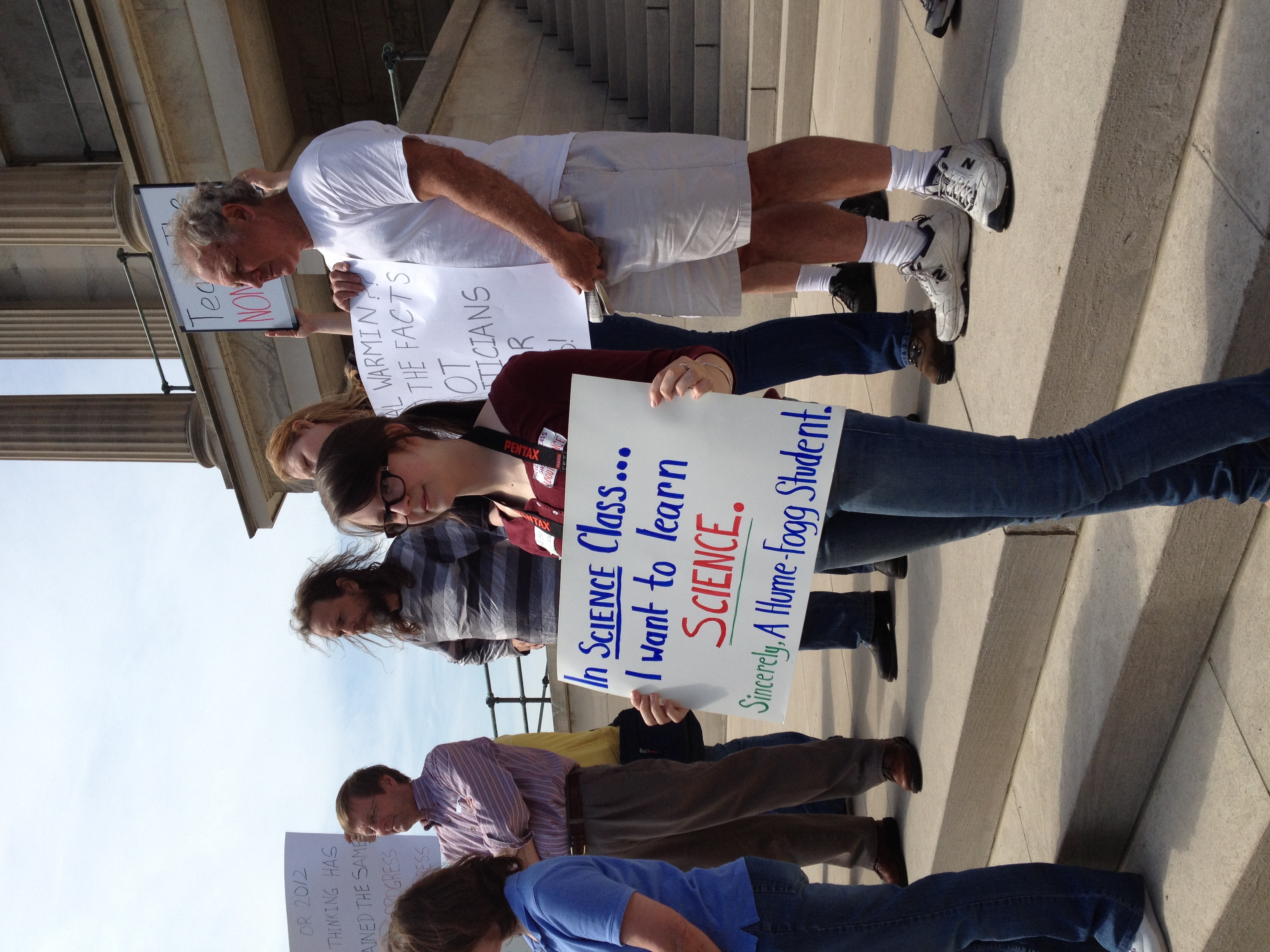
There was a rally today at the state capitol in support of public school science teachers, and to protest opening the door to any hint of teaching creationism in primary and secondary schools in Tennessee.  The bill contained language about this legislation not intending to endorse or represent any religion blahblahblah, but my question is:  For what secular reason does anyone object to evolution? There is no secular reason – this is a religious issue.

Evolution is not controversial.  All biological scientific study is based upon this foundation, and no reputable biological scientist rejects it.  The opposition to the teaching of evolution comes from Christianity, because it is in conflict with the version of creation in the old testament.  And there are those, like the folks who supported and voted for this bill, who feel that if you discount that literal version of events, you have to bring into question the entire book.

You won’t believe what I’m going to say next.  I understand and agree with that last statement.  The theory of evolution is in conflict with the Bible’s version.  They can’t both have happened.  Having been a Christian and active church-goer for 45 years, I understand the importance of the creation story.  All of the rest of the theology depends upon it.  No Adam, no fall, no fall, no sin, no sin, no need for redemption, no need for redemption, no Christ, no salvation, no nothing.

As I stood at today’s protest, surrounded by passionate, science-minded people, as I listened to a Vanderbilt professor, then Vanderbilt graduate student, then a Ravenwood High School science teacher, and I looked at the crowd, most of whom I know from the secular community in the Nashville area, a thought occurred to me.  Where are the moderate Christians?  You may claim that you, in your groovy, modern version of Christianity, embrace evolution, and global warming, and other sciences…that’s great, I guess, although I can’t imagine the mental gymnastics you are doing to get there, but why aren’t you here?  At this rally?  Protesting this backwards, destructive legislation?  If “those Christians” don’t represent you, where is your voice?  Of course the humanists are going to fight this, you know our pro-science position, but why aren’t you, progressive Christian?  Why aren’t you shouting in defense not only of Tennessee’s schoolchildren, but of your own faith?

This legislation opens the door.  We are disrespecting our children by allowing this.  We are forgoing our future by allowing this.  Do you know that Tennessee is ranked 49th in ACT scores?  Do you think this kind of anti-science approach may have something to do with this?  We should be appalled and embarrassed by this legislation.  No, we should be outraged.  We are putting our children and grandchildren at an incredible disadvantage in the national community.

I love this state.  I love the 4 gloriously different seasons, I love the southern charm, I love the rolling hills and the clean rivers and the pastoral countryside.  I want to fight for it, I want to be proud of my home.  But I am discouraged not only by this nasty bill, but by how few, and who, came out in protest today.  This matters.

The seculars will always fight it.  But until moderate Christians begin to police the fundamental fervor that is rampant in its ranks, change will be a long way off.  Speak up.  Grow a pair.  Or else throw in with them.  Shit or get off the pot.  Your own book uses harsh language about how a lukewarm believer should be treated, and for the second time in this post, I agree with the Bible.

Your children, your grandchildren, and every child in this state is counting on you.

Thanks for reading.

Adam Dugger, 1984-2012

Adam’s funeral was today.

I wrote this post not long ago about Adam and his cancer.  After 5 long, brave years, Adam passed away in his home with his wife and family with him.  Today was his tribute.

The circle of people who loved Adam spoke with love and a calmness that must have belied their emotions.  I heard his mother, my friend Renee, read a letter she had composed to him that contained a collage of adjectives that beautifully, word by word, described her beautiful son.  I heard his father, my dear David, speak of how proud he was, not only of Adam’s bravery in facing his diagnoses, but in how, even to his last day, Adam sought to be certain his wife would be cared for.  I heard his brother give that highest possible praise to a sibling:  he was my friend.  I heard his father-in-law describe Adam’s integrity and wit and wisdom.  And I heard his pastors tell of Adam’s strength, and character, and devotion to his family, and one said:  “Because of Adam, I am a better husband, a better father, and a better friend.”

I already loved this boy-man.  He was 6 years old when I met him, and he and his little brother Aaron, and my boys played countless hours of Lego’s and K’nex.  He was a funny, cute, sensitive little kid, who grew into a huge, lovable, kind, witty man.  His passions, besides the obvious one of his sweet wife, were music, board games, and video games.  But if I didn’t love him before today, I would have after this service.

Every song sung, and every word said illuminated the far-too-short life of this remarkable young man.  When we lose someone like Adam, we suffer a personal hurt and pain for the loss of this person so important to us.  In Adam’s case, the pain goes deeper, because it feels like the whole world has lost him, and that we’re poorer for it.  But those of us who knew and loved Adam consider ourselves so very fortunate, even in the pain, and each memory is truly precious.

There are two things I think one hopes for at a funeral or memorial service.  One is for the family to be comforted.  The other is to show the person for who he was:  strengths, weaknesses, humor, passion, history, all of it.  This lovely service for this lovely man succeeded at both.

The Leukemia and Lymphoma Society

Murfreesboro Freethinkers Light the Walk

Bone Marrow Donors’ Registry


me too, Adam


The much anticipated penile explanation blog

This will not be my usual post.  I admit that I blog across a wide range of subjects:  triathlon training, nutrition, secularism, family, law school.  But this subject is out there.  Waaayy out there.

What follows is a true story.  It was told to me by my brother, the attorney in the story.

South of Atlanta, there is a small town by the name of Griffin, Georgia.  Somehow, near the “downtown” center of Griffin (“downtown” is in quotation marks because the difference in uptown and downtown is about 25 yards), a rooster had gotten loose from its unknown owner and set about terrorizing the merchants and residents.  He took up primarily in the Verizon store parking lot, and made front page headlines with his aggression and bad aviary attitude.  Both Animal Control and a pest-control company were hired to capture the rooster, to no avail.  In some chain of events, it was discovered that someone knew or was related to a trapper in Gay, Georgia, who would guarantee the rooster’s removal.

The Trapper made his trip to Griffin, and proceeded to successfully remove the rooster from the Verizon parking lot.  Permanently remove, with the help of a 22-caliber pistol loaded with ratshot (teeny-tiny beebees, for you non-gun folks).  Unbeknownst to the Trapper, the entire bank of windows of the IHOP faced the artillery action, and cell phones lit up the 911 switchboard with reports of an armed, overall-clad, denture-challenged individual in the Verizon parking lot.

There followed then an encounter which resulted in the Trapper in handcuffs, charged with both reckless conduct and discharging a firearm in the city limits.  Here is where my brother comes in.

The Trapper calls a friend who calls Eric and tells him the highlights of the deal, and Eric agrees to represent Trapper.

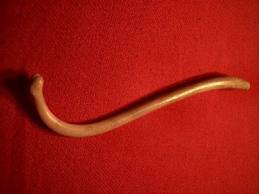
The day of the hearing (yesterday) Eric met with Mr. Trapper and proceeded to go into the courthouse, but not before the obligatory security check.  As we all know, that requires emptying ones pockets, which Mr. Trapper did.  And in Mr. Trapper’s pocket was this:

We’ll leave the explanation of what this is for later in the post.  What Mr. Trapper said is that it is his good luck charm and he carries it with him at all times.  The security personnel allowed him to put it back in his pocket and proceed to his hearing.

The hearing was rather anticlimatic; the more serious of the two charges was eliminated, but Mr. Trapper would be responsible for the reckless endangerment charge that was accompanied by a fine of $200.  As they were walking to his car, Eric commented that his good luck charm worked, and he asked what the charm was.  Mr. Trapper said:

“It’s a raccoon pecker.  How much do I owe ya?”

Without missing a beat, my brother said:

“Well, the fee is $50, but because we got you off on the big charges, I’d like the good luck charm as a tip.”

Trapper thought a minute and said:

“Alright, I can git another’n.”

Then he proceeded to tell my brother that he was never coming back to the town of Griffin, that where he was from in Gay, GA, he knew everyone and they knew him.  In fact, he said, if Eric ever needs anyone shot, just make sure it was in Gay, Ga.

Sometime during the day he also shared with Eric his personal trick of trapping coyotes.  One of the sentences included the phrase “ground-up housecat”.  I am not making this up.

Ok, so the good luck charm.  It’s a raccoon baculum, and the Trapper was indeed, correct.  Did not see that coming, and I pride myself on the number of NatGeo and Discovery Channel specials I have watched.

So there you have it.  The Great Griffin Chicken Murder of 2012.  And its added bonus content of genitalia rodentia.  And coyote bait.  Gotta love the south.

Thanks for reading?

Cancer blows. And there aren’t enough words.

My friend’s kid is sick.  Really sick.

I don’t know what to do.

This young man (I almost wrote “boy” – he’ll be 28 in 9 more days, but I’ve known him since he was 6) is exceptional.  He’s funny and warm and smart; that doesn’t even matter – my friend is in love with her kid like we all are.  Her heart is breaking, and I don’t know what to do.  Every time we email back and forth, I close with the same tired, lame, useless “I love yous” and “I’m so sorries”.

Adam has struggled with leukemia for the past 5 years.  As with diseases like this, there are times of false security when the bastard lays low and allows you a moment to breathe and look around, and then back he waltzes, right into the middle of your life.

Adam is an engineer, Purdue 2007, and is a classic computer geek/nerd.  I got to attend his wedding in Indiana several years ago, and the legend was that he proposed to his lovely wife Kelly after she beat him in his favorite video game.  When Adam and his brother Aaron and my two sons were little, we lived on the same quiet street.  My friend Renee, Adam’s mom, and I would discuss their passion for videogames and bounce restrictions and limits off each other to make sure we were on track.  Far simpler times; like we should have worried about that.

When the boys were little, and it was the big boys against the little boys, inevitably Adam would become the peacemaker and the Lego’s would once again become the domain of all 4 of them.  Even now Adam’s struggle, lying in a hospital bed, is not wanting to disappoint anyone if he can’t get down his daily count of calories due to the chemo and other meds.  He’s a kind, compassionate, gentle, loving man, and he’s sick, and I can’t help my friend.

On his Caring Bridge site, his guestbook is full of good wishes and good thoughts.  It is indicative of how much the boy is loved and cared about to read these posts.  Each time I visit the site, I have my fingers hovered over the keys, trying to think of what to write, how to say how much we care and want him to get well, about our confidence in his medical team, how spectacular we think he is.  As I read the other entries, I see that my fellow wellwishers are experiencing the same writer’s block.  I think about Adam and his family reading every word and the comfort they might take in the love expressed from friends, even in middle of their despair.  And all of the strength that words have ever had just vanishes.

Last year, just before Bonnaroo, Adam inboxed me to recommend a band that was playing.  I made a point to go hear them, and as I suspected, they were metally and weird, and just what you’d expect from a game geek/engineer/science/computer guy.  But I loved it just because Adam wanted me to.

And now the hospital is home, the Candlewood Suites is home for my friend Renee, and her husband David.  A few years ago, when Adam was first sick, and I was either still in massage therapy school, or just out, I made a trip up for a couple of days with Renee.  She’s probably the smartest friend I have (which is saying something with the group of people I hang with!), but also one of the kindest and most thoughtful.  I went up to support her and give her a massage and help her, but it was she who had girlie presents for me of lotion and candies and we ate like kings while I was there.   Renee and David made the drive down to Murfreesboro for my 50th birthday party, and one of Renee’s gifts to me was an engraved wine glass that read “The Greatest Ironman is a Woman”.  She has since finished her PhD in nursing and is teaching at the U of So. Indiana, and of course has had a long career in helping and teaching others.

She and I are both very expressive, so our relationship has through the years been one of many words.  Long conversations, long letters, long emails, and now I don’t know what to say.  I told her in my last email that I so wanted to say something profound and comforting, something to make her smile, or laugh, or think, and I’ve failed.  Epically failed.  It’s cliche to write it, but words are so thin and meaningless in this situation.  That’s hard to take in a relationship in which words have had such profound meaning.

I love you.  I’m sorry.  I hate this.

Wrapping you up in a friend’s arms, because it’s all I can do.

Adam and Renee at her PhD graduation celebration
Adam and beautiful Kelly
This is the boy who suggested Opeth
Dugger Fam

It’s not all about faith

I had an interesting conversation with a friend recently (see: Blog Rule ➜ I won’t reveal who you are unless I ask for and get your permission) about evolution and our “need” for faith.  It began with a discussion about a comment I made regarding every culture having some story or fable explaining the beginnings of time, the weather and other natural phenomena, and what happens after death, and ultimately encompassed all of the components of why people hold fast to religious beliefs.

The first question is:  Do humans have a psychological need to believe in religion?

I think we have a need to understand our environment.  I think we see this in the subjects the myths touch on – how did we get here, what is our purpose, what happens when we die.  It is astounding how similar these myths are from one culture to another.  A great many have the story of a big flood (here, here, and here), and most have some description of an afterlife.  I can imagine these tales being told from generation to generation, with children listening in wide-eyed wonder as each village’s best storyteller would embellish and dramatize.  I think these stories brought comfort and continuity and it is completely understandable why these stories were told and retold.

The next question then is:  After science explains so many of these things, why then continue to embrace the faith?

This question is a bit more complicated.  For me, it helps to think of this in terms of columns, or supports that hold up the foundation of belief, the loss of any single one of which won’t bring down the structure, so to speak, but collective loss of several will.

One of those columns is the desire to be cared for and directed.  Life is at times troubling, and difficult, and confusing, and unfair.  The feeling I think we are seeking is that same feeling one has as a child when one sees one home and parents as protecting and complete and profoundly secure.  It is not surprising that this feeling has a great deal of appeal, even to adults.  This is one of the supports that is hardest to let go; it’s almost a Stockholm’s syndrome, a celestial North Korea, as the late Christopher Hitchens said.  An eternal, observing, intervening, judging parent.  My own experience with this was exactly that:  before my deconversion, the idea of God loving and designing my life gave me comfort; afterward, the ownership and self-direction were liberating and empowering, far surpassing any grief at the loss of the Dear Leader.  The thought that my life would have exactly the meaning with which I would choose to bestow it was as intense and humbling a moment as I’ve ever had.

Another of these columns is the desire for an afterlife.  This is entirely understandable at first thought as well.  Death is so very final, and the loss of a loved one is as painful an experience as we have as human beings.  It isn’t even about “unfinished business”; we just don’t want to say a final goodbye.  For me, this was the last strand that held me to my faith – stronger than my need for a God, stronger than my need need for community, stronger than my fear of the unknown.  Having to say a permanent goodbye to those loved ones I had planned to see again was devastating.  Letting that go, however, has had the additional effect of placing much greater value on this life, on these moments, on these people, just as we are.  There is a particular boy I want to see again, who has died.  I want to talk to him, to see him smile, to ask him questions.  I believe I won’t have that opportunity, and that is heart-wrenching.  So, instead, conversations and moments with the people I love here in this time and place become ever so much more important and precious.

"For me, it is far better to grasp the Universe as it really is than to persist in delusion, however satisfying and reassuring."

Another column is the complicated issue of morality.  As a believer, I used the if-you’re-not-a-Christian-you-can-just-make-things-up phrase from elementary school through my middle age, as if that were the worst statement you could cast toward an infidel.  I remember, though, as an Adult Class Sunday School teacher struggling to teach the lesson of the evil of situational ethics.  What were the absolutes of the faith?  Don’t murder?  Sure, except for the death penalty.  And self-defense.  And defense of others.  And euthanasia.  And war.  Truth-telling?  Again, yes, except for when you are hiding Jews in your attic or Tutsis in your hotel.  Coveting?  Thought crimes?  Really?  It’s getting messy and sticky in here.  Making decisions and judgements is hard, and comes with great responsibility, and may depend upon the details.  The drive to abdicate this sometimes troublesome and challenging process is another reason I think the church is so appealing to us.

Another column, that I’ve just recently blogged about, is the need to belong to a community.  “Everyone I know believes the way I do” is comfortable and affirming, allows a group to pull in the same direction, focuses money and energy, and is one of the worst reasons for retaining a faith that I can imagine.  We’ve just gotten through another Christmas season where, here in the south, there is a lot of conversation about the war on Christmas.  Outrage on Facebook statuses, print and electronic media reports about public nativity displays, mass emails about taking a stand for Jesus by keeping Christ in Christmas — all feed this very human need to conform and be included in the in-group.  Let me suggest that rather than, as a believer, looking for ways to feel oppressed and put-upon, spend a day or so looking at it upside-down:  see the country through the eyes of atheism, and see how firmly entrenched in Christian language, culture, and tradition our society really is.  How many visible and open non-believers are in public office?  (guess first, then check here and here)  How many US citizens identify as Christians?  Hard to be in the minority when you’re in the majority.  But these statistics are certainly revealing as we examine this primal need to be part of community.

Related to the above, and maybe particular only to me, is the verification of the faith through the test of time.  When I was in college, and was beginning to question what I believed, I put a lot of stock in the fact that Christianity had been around for so long – how could that have happened were it not true?  I don’t remember evaluating other long-standing religious ideas with that same criteria – Islam, Judaism, paganism, Jainism – and coming up with the same result.  I now agree with Tim Minchin’s sentiment:  “I don’t believe just because ideas are tenacious that means that they’re worthy”.  I explain it this way:  for every reason that you can ennumerate that falsify insert another religion here, those are the reasons I apply to Christianity.

You can tell that I’ve spent time with my children when my posts get philosophical and reflective – the little buggers have a way of forcing me to think and clarify my thoughts.  On Friday it’s back to school (2L!) and training, and the posts will be back to the law school/working out/massage therapy world. I haven’t done a 50 Things update in ages, and I’m planning out my 2012 races that I’ll blog about soon.

Thank you for reading, especially when the words are not comfortable.  I promise to always reciprocate – just bring the link!

Community

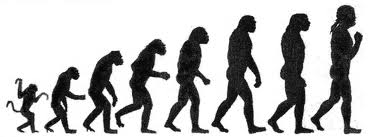
I credit evolution.

My kids get tired of my constant reference to it, but I think we can learn so much from our evolutionary heritage.  I’m not a scientist, so all of this is amateur, but I’m learning how to apply what evolution can teach us now.

About 10 years ago, when I started on a journey to regain my health, I discovered information that allowed me to do that.  I began to study metabolic science, nutrients, human anatomy, and what that information can tell us about what to eat and how to move.

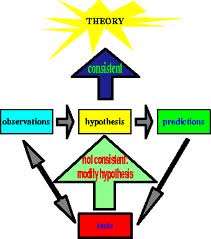
Because I chose law school over medical school, I had to learn how to learn science, starting with formulating a hypothesis, studying the process, studying the data, in this case applying it personally (n=1), and seeing if the hypothesis holds up.  So here I started with the hypothesis that maybe we should eat like our ancestors ate, since that seemed to have allowed them some survival advantage.  I’ve written a whole other blog about all of that; I mention it because it’s the method I’m going to use for this next topic.

Back to evolution.  As I study anthropology and what our societies were like before we embraced agriculture, which seems to be a real change in our history, I’m finding that we lived in small, cooperative communities, pooling resources, celebrating together, grieving together, raising children, struggling to understand our environment, finding ways to protect ourselves from the environment and predators.  Almost all of these societies, across the globe, had myths and tales about origins of the world, explanations for natural phenomena, and rituals for birth and death.  As Americans, our particular pedigree comes from the Abrahamic line, and those rituals and rules over the years have become manifest in contemporary Christianity.   The church has provided a place for gathering, to worship, instruction, support, a common agenda – all sating very primal needs.

Sometimes in my discussions with believers, the topic veers from the validity of religion to the usefulness of religion.  I absolutely believe that religion can be useful; this blog is about just that.  I also believe that its usefulness has no bearing on its truthfulness (please tell me I just invented that phrase).

As I attend secular conventions (AA in April, TAM9 in July, Skepticon 4 in November), and as an avid blog reader, and new activist, I have made the following observations about the secular community:

1.  We are intellectuals.  We can blog the hell out of any topic, including, but not limited to, gelato.  We love the process of language, we love words, we have a unique ability to explain our position, and, thanks to the interwebs, can back it up with citations and references.

2.  We own the internet.  No shit.  It is the single most effective reason atheism is experiencing the growth it is – even evangelicals are acknowledging that.

3.  The future of the movement is in the hands of college students – not individual, identifiable people, but as a demographic.  It’s the perfect window of age to be free from familial obligations of church attendance and exposure to a broad base of philosophical and social input, yet young enough not to have established personal habits of faith and superstition in their own new families.

4.  We are young and we are old.  It seems that, both through the blogs and attendance at conventions, that we are comprised of youngs (18-25) and olds (50+).  It’s not that we don’t have the middle folks – in my own local group that’s actually a large percentage of our number – it’s just that that group is busy with career and spouses and children that the youngs and the olds don’t have.

5.  Community.   Online: we have it in spades.  Every support group you can imagine – recovering fundamentalists, ex-Mormons, secular parenting.  Flesh and blood: not so much.  We’re working on it, and we’re getting better at it, but we’re no match for churches.  I think that that sense of community, rather than a devotion to the faith itself, is what keeps a lot people in church.

As our evolutionary history tells us, we are social beings.  We need to feel included, but individual, protected but not restricted, part of a group yet independent.  The contemporary church has provided its version of that; I think the secular movement can do at least that, and even do it better.

My local group of seculars (hereinafter known as: the posse) is heavy on the very group I say the movement as a whole doesn’t have:  young adults with families.  There are couple of us oldies, and the ubiquitous college agers, but we’re lucky enough to have several young couples and their beautiful, freethinking young children.   Which finally brings me to the point of this post:  my scheme to take over the world social experiment.

Our posse, instead of just hanging out and sampling the finest hops our town has to offer, is going to add a bit of intention to our efforts.  We’re going to try to make our get-togethers a smidge more family-friendly:  choosing restaurants that are easier on the wallet, more conducive to child palates (notwithstanding my moratorium on Chuck E Cheese), parties where the children are accommodated with caretakers (perhaps education majors from our local university?), scheduled activities that work around school nights and bedtimes, service projects in which entire families can participate.

So stay tuned for updates — right now I’m on my way to a New Year’s Party with said posse – best wishes to all for 2012!!

Blog at WordPress.com.

Up ↑